

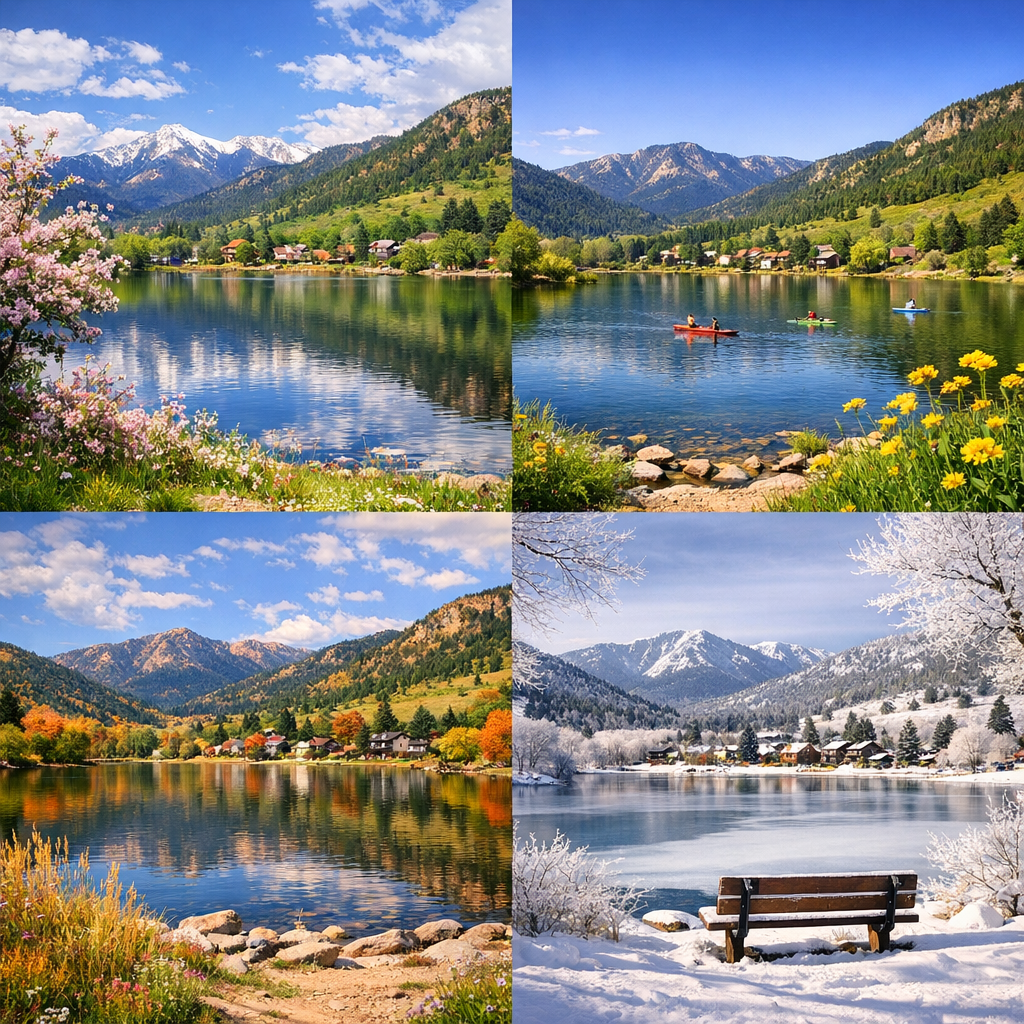
Palmer Lake, Colorado, experiences a diverse range of weather conditions throughout the year, characterized by warm summers and cold, snowy winters. Understanding these patterns can help residents and visitors prepare for the varying climate.
Temperature Variations
The warm season in Palmer Lake spans approximately 3.2 months, from early June to mid-September, with average daily high temperatures exceeding 71°F. July stands out as the warmest month, boasting an average high of 79°F and a low of 53°F. Conversely, the cold season lasts about 3.6 months, from late November to early March, with average daily highs below 46°F. December is typically the coldest month, featuring an average low of 18°F and a high of 39°F.
Precipitation and Snowfall
Precipitation in Palmer Lake is fairly evenly distributed throughout the year, with an annual average of approximately 21.94 inches. April tends to be the wettest month, averaging 2.79 inches of precipitation. Snowfall is common during the winter months, contributing to the area’s picturesque landscapes.
Seasonal Highlights
- Spring (March to May): Temperatures gradually rise, with average highs increasing from 46.8°F in March to 61°F in May. This season also sees a rise in precipitation, particularly in April.
- Summer (June to August): Warm temperatures prevail, with July being the hottest month. While generally warm, occasional afternoon thunderstorms can occur, providing brief respite from the heat.
- Autumn (September to November): A gradual cooling trend is observed, with average highs decreasing from 70.5°F in September to 46.4°F in November. This period is marked by vibrant fall foliage and a decrease in precipitation.
- Winter (December to February): Cold temperatures dominate, with December being the coldest month. Snowfall is common, contributing to the area’s winter charm.
By familiarizing oneself with these seasonal patterns, residents and visitors can better plan activities and make the most of what Palmer Lake’s climate has to offer throughout the year.