

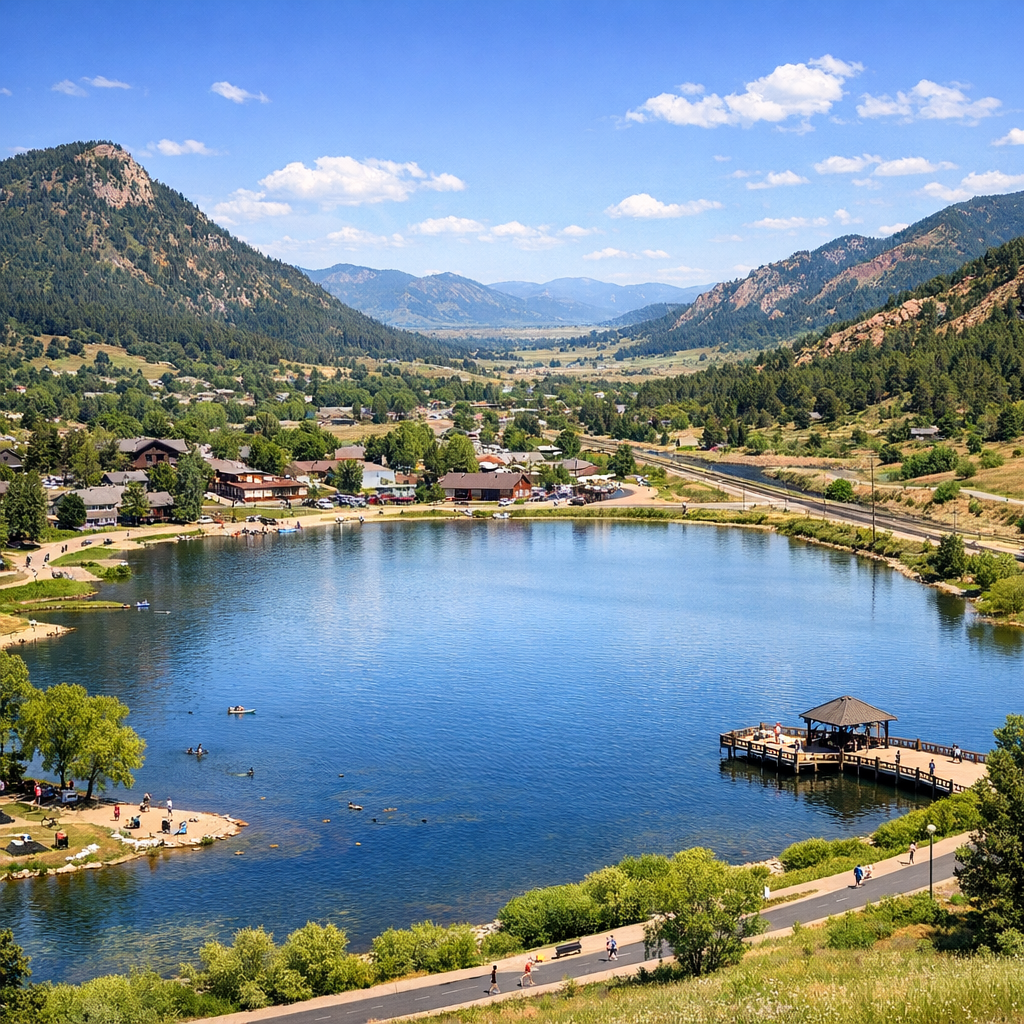
Palmer Lake, nestled within the Palmer Divide, experiences a diverse climate characterized by warm summers and cold, snowy winters. The town’s elevation of approximately 7,297 feet contributes to these conditions, with average high temperatures ranging from 41.5°F in January to 80.9°F in July. Precipitation is fairly evenly distributed throughout the year, with April being the wettest month, averaging 3.00 inches of rainfall.
One of the town’s notable environmental concerns is water quality. Palmer Lake is served by three public water systems, collectively serving a population of 3,044. These systems have recorded 187 violations of the EPA Safe Drinking Water Act, including 40 health-based violations. Contaminants such as chlorine, chlorine dioxide, and total organic carbon have been detected above safe levels, posing potential health risks to residents.
Erosion and drainage issues have also been reported along Highway 105, particularly at the intersection with South Valley Road. Residents have observed significant erosion of road shoulders and adjacent properties due to inadequate drainage, leading to concerns about infrastructure stability and safety.
Efforts to address these environmental challenges are ongoing. Community initiatives like ‘Awake the Lake’ have been instrumental in studying and mitigating issues related to the lake’s water levels and quality. Additionally, local authorities are working to improve drainage systems and prevent further erosion along critical roadways.
Understanding Palmer Lake’s unique climate and environmental challenges is essential for developing effective strategies to preserve the town’s natural resources and ensure the well-being of its residents.